Eurasian blue tit
General info
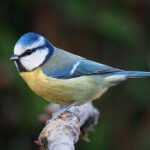
The Eurasian blue tit (Cyanistes caeruleus) is a small passerine bird in the tit family, Paridae. It is easily recognisable by its blue and yellow plumage and small size.
Eurasian blue tits, usually resident and non-migratory birds, are widespread and a common resident breeder throughout temperate and subarctic Europe and the western Palearctic in deciduous or mixed woodlands with a high proportion of oak. They usually nest in tree holes, although they easily adapt to nest boxes where necessary. Their main rival for nests and in the search for food is the larger and more common great tit.
The Eurasian blue tit prefers insects and spiders for its diet. Outside the breeding season, they also eat seeds and other vegetable-based foods. The birds are famed for their acrobatic skills, as they can hold on to the outermost branches of trees and shrubs and hang upside down when looking for food.
Description
The Eurasian blue tit is usually 12 cm (4.7 in), long with a wingspan of 18 cm (7.1 in) for both sexes, and weighs about 11 g (0.39 oz).
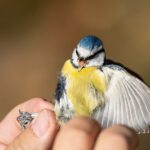
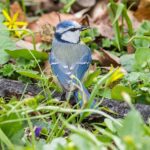
A typical Eurasian blue tit has an azure-blue crown and dark blue line passing through the eye, and encircling the white cheeks to the chin, giving the bird a very distinctive appearance. The forehead and a bar on the wing are white. The nape, wings and tail are blue and the back is yellowish green. The underparts is mostly sulphur-yellow with a dark line down the abdomen—the yellowness is indicative of the number of yellowy-green caterpillars eaten, due to high levels of carotene pigments in the diet. The bill is black, the legs bluish grey, and the irides dark brown. The sexes are similar and often indistinguishable to human eyes, but under ultraviolet light, males have a brighter blue crown. Young blue tits are noticeably more yellow.
Destribution and habitat
Behaviour and ecology
Eurasian blue and great tits form mixed winter flocks, and the former are perhaps the better gymnasts in the slender twigs. A Eurasian blue tit will often ascend a trunk in short jerky hops, reminiscent of a treecreeper. As a rule the bird roosts in ivy or evergreens, but in harsh winters will roost wherever there is a suitable small hole, be it in a tree or nesting box. They are very agile and can hang from almost anywhere.
This is a common and popular European garden bird, due to its perky acrobatic performances when feeding on nuts or suet. It swings beneath the holder, calling “tee, tee, tee” or a scolding “churr”.
Bird